
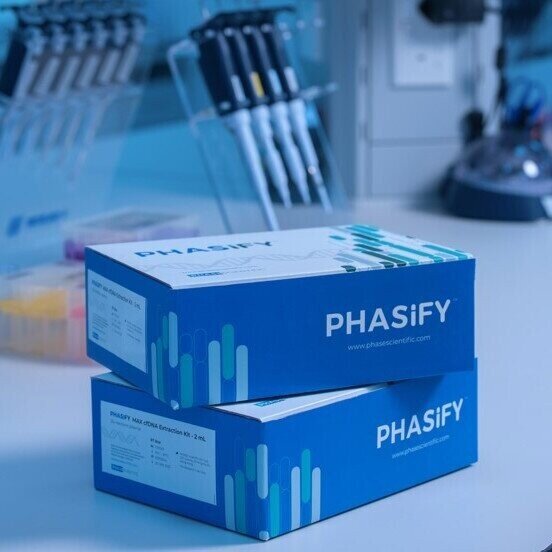
Hong Kong’s Phase Scientific International (PSI) has raised US$34 million from private investors to further develop a non-invasive test for human papillomavirus (HPV), a major cause of cervical cancer.
The test developed by the Hong Kong Science and Technology Park-based company, best known as a provider of COVID-19 tests during the pandemic, was the world’s first urine-based HPV test, it said in a statement on Tuesday.
Founder and CEO Ricky Chiu Yin-to said the company aimed to commercialise a home collection kit after the completion of a large-scale clinical study next year, which was expected to confirm favourable results the test had obtained so far.
“The market potential is huge because urine sampling is non-invasive and easy to do, which will help raise the compliance rate on regular testing,” he said.
Some 95 per cent of cervical cancer is caused by persistent HPV infection of the cervix, according to the WHO.
PSI had overcome technical barriers for using urine as a medical sampling medium through a patented technology that concentrates and purifies urine samples, Chiu said.
The technology could capture 10 times more biomarkers in urine specimens than the current “gold standard” in liquid biopsy diagnostics, according to the company.
The company’s latest Series A fundraising round was led by a private-equity fund managed by Hong Kong-listed asset manager Value Partners Group, with participation from some unnamed family offices and healthcare-focused venture capital firms.
PSI, established in 2012 in the US, previously received US$3 million from the Bill and Melinda Gates Foundation and governments in Hong Kong and the US, in addition to US$20 million from several rounds of angel investment.
Only one-third of women between 25 and 64 in Hong Kong have complied with the government’s recommendation of having a cervical screening at least every three years, according to a Department of Health health survey between 2020 and 2022. Cases in the city have jumped 30 per cent in the last decade, according to data from the Hong Kong Cancer Registry.
The World Health Organization has set a 2030 goal of having 70 per cent of women screened for cervical cancer using a high-performance test by the age of 35. It also aims to achieve a 90 per cent treatment rate for women with precancerous lesions.
In a recent clinical study of 1,000 participants, conducted by PSI’s partner Peking University Shenzhen Hospital, the urine-based test showed 93.4 per cent sensitivity in detecting precancerous cervical lesions. It also achieved more than 97 per cent concordance with the gold-standard Pap smear, which collects cervix cells, Chiu said.
The test won the “best clinical research abstract” prize at this year’s American Society for Colposcopy and Cervical Pathology scientific meeting and was featured at the Chinese Society for Colposcopy and Cervical Pathology Conference, PSI said.
PSI aimed to expand the clinical study to some 20,000 participants next year by collaborating with both Peking University Shenzhen Hospital and a university in Hong Kong, Chiu said.
If the larger study confirmed the results obtained so far, PSI would use the data to apply for regulatory approval from the US Food and Drug Administration and China’s National Medical Products Administration for its test to be used by third-party laboratories.
Currently, only its own laboratories in Hong Kong, Shenzhen and California are accredited to process urine samples for the test.
Through its 2023 acquisition of ONCO Medical Laboratory, Hong Kong’s largest provider of gynaecology testing services, PSI can process more than 80,000 Pap smear tests per year. It aims to process the urine-based tests through ONCO as well.
The test could also be used by men, who represented a growth market, Chiu said, because in developed nations like the US, cases of HPV-induced head and neck cancers already exceeded cervical cancer cases.
PSI aimed to launch a Series B financing round in 12 to 18 months, after the expanded clinical study was completed, to fund marketing and commercialisation, Chiu said.
“We will then be looking for a strategic partner for accelerating the commercialisation,” he added.
